Showing posts with label New BMW NJ. Show all posts

Wednesday, January 15, 2014

Tech and the Auto Industry


Today the use of technology is prevalent throughout society and it is only continuously growing. Car companies are partnering with major companies to develop technology so the driver can use their mobile devices to interact within their vehicles. The tool that is already used for many of everyday tasks is now finding a way to help people along their commute.  Many new vehicles feature a GPS system, hands free communication, and the ability to sync music, but the development is only continuing to move forward.

The question that will be an issue for car companies and the public is how this may become another distraction for drivers. While many benefits outweigh the negatives the possibility of dangers it may cause to drivers on the road is always a concern to consider. What do you think of the development of this technology? Do you think it will better assist drivers or cause additional problems on the road?

Wednesday, October 30, 2013

Are Your Tires in Dangerous Condition?


Good tires are one of the most important aspects of safe driving.  Hands down.  Sean Kane, president of Safety Research and Strategies, Inc. explains an aging tire to an old rubber band. "If you take a rubber band that's been sitting around a long time and stretch it, you will start to see cracks in the rubber," says Kane, whose organization is involved in research, analysis and advocacy on safety matters for the public and clients including attorneys, engineering firms, supplier companies, media and government.

Cracks in the rubber develop over time and can appear on the surface and inside of the tire, as well.  This cracking can cause the steel belts in the tread to separate from the rest of the tire. Improper maintenance and heat can accelerate the process.

How Long Does a Tire Last?

Lifespan differs and there is no guideline on tire aging, but tire manufacturers like Continental and Michelin say a tire can last up to ten years, provided you get annual tire inspections after the fifth year. There’s no way to put a date on a tire because there are several factors that affect the life of the tire:
·      Heat
·      Storage
·      Conditions
·      Use

How to Determine Your Tire’s Age

All you need to know is the U.S. Department of Transportation (DOT) number.  Tires manufactured after 2000 have a four-digit DOT code.  The first two numbers represent the week, while the second two represent the year.  If a tire has the code 1109, it was made in the 11th week of 2009.   After finding the tire’s birthdate take a look at the rubber.  Look for tread distortion, hairline cracks in the sidewall, and vibrations in the dynamic properties of the tire, could be cause for alarm. 


For more information, come in and see us.  We’ll do an extensive tire inspection and let you know the exact status of your tires.

Wednesday, October 16, 2013

5 Facts About Kids and Car Safety


Kids are the future of our nation, the bubble gum popping and bike riding youths of the new world.  Keeping them occupied in the back seat of a moving vehicle is difficult enough.  Today, in our weekly blog, we describe 5 facts about kids and car safety. 

1.)     Most accidents happen near home: Most accidents occur on residential, rural roads that are local, during a routine trip to the grocery store or day-care center.  No matter what, always buckle your child into their seat, even if the drive is two minutes away.  "Always buckle your child up, no matter how near or far you're going," says Marilena Amoni, associate administrator for research and program development at the National Highway Traffic Safety Administration (NHTSA). "And never forget to use your own seat belt. Kids watch everything that you do, so it's important that you set the right example."

2.)     Kids are at more risk than babies and toddlers: If your child is between 4 and 8 years old, they are more likely to be hurt in an accident than their smaller counterparts.  Most parents strap their infants into rear facing car seats, but only 20% of kids between 4 and 8 ride in booster seats as safety experts recommend. Some children even sit in the front seat before 13 years old.  Children are the safest in the backseat, putting them far away from the impact of a frontal crash.

3.)     SUVs aren’t safer: It’s BIG, bad, and menacing, but SUVs are no safer than ordinary sedans.  They’re more likely to rollover.  The safest vehicles are low to the ground and larger (station wagons).

4.)     A car does NOT have to move to be dangerous: Parked cars are also, surprisingly deadly.  As many as 220 children per year are killed in non-traffic auto accidents.  Some are strangled by a window when they’re leaning out, inadvertently leaning on the rocker-type power window switch.  Other children, when alone, release the emergency brake, setting the car in motion.  Finally, at least 30 kids die each year when their parents leave them in the car and they suffocate from overheating. "Children should never, ever be left alone in an automobile -- not even for a minute," says Terrill Struttmann, executive director of Kids in Cars, an education and advocacy organization he and his wife started after their 2-year-old son was killed by a car set in motion by two kids playing alone inside.

5.)     Kids don’t need to be inside a car to be hurt by one:  nearly 400 children are killed each year when they’re hit by an automobile.  ALWAYS keep an eye on your little ones, no matter how many times you’ve warned them to stay out of the streets.  A survey conducted by Safe Kids Worldwide found that a majority of drivers speed in school zones, and that nearly a third violate stop signs in neighborhoods where there are kids.

Do you have any tips of your own?  Feel free to comment below:

Wednesday, October 2, 2013

The Best Ways to Make Your Tires Twinkle


We love our cars.  SUV’s, coupes, sedans, mini-vans…they’ve all become an integral part of our busy lifestyles.  We know that you take pride in your vehicle, giving it the routine wash, occasional ‘spit’ shine when necessary, but it’s always been difficult to clean one location efficiently.  The tires!  In today’s blog, we’ve got a couple options for you to choose from.

Spray-On

The Spray-on method is an easy to use solution in a bottle with a sprayer and nozzle on top.  Basically, you apply the spray directly to the tires, making sure to not spray TOO close.  By using a sweeping motion to cover a large area, you can achieve a nice wet glossy look to your tires.  What’s the only downside?  The spray-on sheen can sometimes leave stains on the side of your car from an outside breeze.  We recommend using it inside a garage or putting the liquid on a sponge and applying it manually. 

Gel

When compared to the spray-ons of the world, a gel seems to last longer, enabling a lasting effect with tires over time.  You’ll need an applicator, and a sponge for this method.  The gel gives a nice black color to tires without the ‘gloss’ effect.  You can achieve a glossier look by applying a second coat of gel, just be sure to wait a few minutes for the gel to dry, as it could attract dirt if it’s driven on too quickly. 

Foam

Foam Tire shine also comes with it’s own spray bottle and the easiest to apply.  This type also cleans off the dirt from your tires.  Just apply the foam and wipe it after it sits idle for a couple of minutes. However, be careful with some products that may turn your tires brown or yellow. Some tires really do not agree with certain tire shine products so you may have to try a new product.

Have a tip for us to add?  Let us know below!

Wednesday, September 25, 2013

The Age Old Question: Manual or Automatic


Hm…that’s what comes to mind when you’re posed with this question.  Manual…you begin to ponder, imagining yourself as a speed demon.  You’re Evil Knievel reincarnate as your car reaches gut-wrenching speeds, your hand fixated on your gearshift as you weave through traffic.  Picturing Automatic is another animal.  You can enjoy the relaxation of not shifting gears, leaving more focus to the road and your surroundings.  The car ride is less work on your skills and more about maintaining a smooth ride.  So, when posed with the question of Manual Vs. Auto, which is better?  In today’s blog we discuss the differences and let YOU decide…

Manual

If you’re in search of power, Manual transmission is definitely the way to go.  For example, an automatic equipped Dodge Neon has a reported 0-60 MPH time of approximately 10.5 seconds.  The same Neon when equipped with a 5-speed manual has a reported 0-60 time of 8.1 seconds; a huge difference.  The acceleration offered from a vehicle with a manual transmission is usually higher, because of the precise shifting the car encompasses. 

Manual transmissions also excel at fuel economy.  Most new Automatic cars have an EPA rating of only 1 or 2 MPG less than the same model car with a manual transmission.  So, you’re not saving TOO much with a manual, but it is a small difference. 

When it comes to maintenance, most manuals require less service than their automatic counterparts.  The clutch disc in manual transmissions does need to be replaced on occasion. There are many factors that determine how long a clutch will last such as driving style, the material the clutch disc is made of, and the amount of city vs. highway driving. Clutch replacement is often a labor intensive task and can cost several hundred dollars if performed at a repair shop. 

Automatic

Automatic cars are easy.  There’s no clutch or shifter to control.  That means city driving is a breeze and commanding steep terrain is simple.  There’s no ‘rollback’ with an automatic car while its in drive, giving you more energy to controlling your car on the road.  If you live in a busy city its also beneficial because of stop-and-go traffic.  An automatic takes away the worry of shifting gears, leaving an open hand to perform a small task.  Since automatic cars only require one shift “D”, while driving forward it has a wider appeal.  So, if two people were sharing a vehicle after its purchase no learning would be required.  If one person couldn’t control a manual transmission it could be easier for them to stick with an automatic. 

Some cars offer a “best of both worlds” style known as manumatics.  The term differs from brand to brand, but the vehicle could begin in automatic and be shifted into a manual mode that allows control through the gears like a regular manual without the hassle of a clutch.

Automatic cars also have a higher resell value.  The appeal for an automatic is much larger than that of a manual.  Thus, becoming an easier seller for when you trade-in your vehicle.

So, we’ve given you the facts.  What will you choose??? What do you prefer?  Feel free to comment below:

Wednesday, September 4, 2013

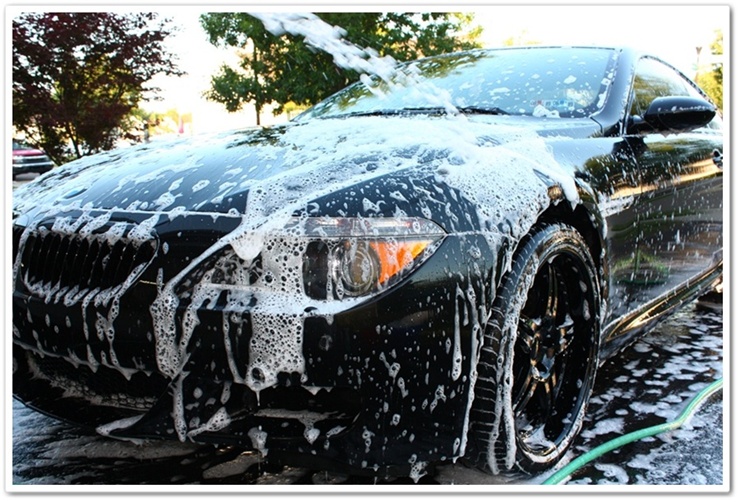
What Happens When You Get Your Beemer Detailed


We all know that when you get your vehicle “detailed” that the end product is a shiny version of your dirt laden, gummy worm sticky, dust ridden commuting machine.  What we don’t know is the exact process and precision that goes into making your car brand new again.  In today’s blog, we explain the steps that car detailer’s make to make your car a shining reflection of your ideal driving machine.

Car detailing helps retain a higher resale value for your vehicle. 

Detailers start with the exterior.  This involves cleaning and creating a shine to the car’s paint, chrome trim, windows, wheels and tires. Products can include: detergents, detail clay, wax, polishes and a variety of applicators and special cloths.

The exterior paint begins with cleaning, polishing and protecting. Cleaning the car starts by removing all foreign surface particles from exterior surfaces by washing it.  Polishing refers to using mechanical polishes by hand or with a machine and specific polishing pads that remove microns of clear coat from a vehicle to remove fine scratches and swirls from a paint surface produced from improper washing or drying technique.  Protecting involves the application of a protective wax that prevents foreign matter from adhering to the surface of the vehicle. 

The interior detailing includes cleaning the compartments, dash areas, windows, panels and seats.  Vacuuming is standard and steam cleaning and brushes may be used to remove stains on upholstery. 

Keep that shine going!!!

Wednesday, July 31, 2013

Top 5 Things Drivers HATE


To begin today’s blog, lets paint a vivid picture of what could, or has, happened during your morning commute.  So, there you are, slowly sipping your morning coffee, the morning dew and the soothing sounds of your favorite band create a cozy safe haven on your way to work.  Your hands are on the wheel, and you’re focused.  Then, out of NOWHERE some (EXPLETIVE) swerves into your lane, causing you to spill your coffee and react swiftly to avoid injury.  In your panic-stricken state, you’ve managed to avoid an accident.  In that moment you look up to watch the person that swerved into your lane speed by, oblivious to what he had just done.  Your keen eyes focus in on him long enough to realize he was updating his Facebook status.  WOW.  In today’s blog, we asked our community for the top 10 things people HATE when they’re driving. 

Tailgaters – people that creep behind closely to your vehicle in a stop and go motion.  Usually they’re in a rush to go nowhere.

Texters – either they’re updating their Facebook status, tweeting, sending a text or writing their monologue; these individuals are causing HUGE accidents.  This can all be avoided by focusing on the commute at hand!

The “no signal when turning lanes” Guy – this person is infuriating.  They change lanes without looking or indicating.  All of this to arrive at a red light with nowhere to go.

Rubberneckers – there’s always that one person that stops an entire highway to gawk at something of interest.  A pretty billboard, a traffic accident, who knows?  Either way they’re ANNOYING and troublesome for those pressed for time.

The Makeup Queen – this young woman (or man for that matter) is applying an entire face of makeup while operating a motor vehicle.  This is a HUGE no no. 

So, do you have any to add?  What really grinds your gears?

Wednesday, June 26, 2013

Annual Summer Maintenance Checklist


Summertime is here!  Small children are parading the streets with a sense of pride and enjoyment, parents are scrambling to avoid the heat by hibernating near air-conditions and consumers nationwide are looking forward to the faint smell of charred BBQ.  This summer, we’re running down our checklist of car maintenance tips for our customers.  In today’s blog, you’ll find a quick list of services we can provide that will help you maintain the life of your vehicle and ensure a smooth summer this year. 

Radiator Flush – Coolant is important to your radiator and should be replaced accordingly. 

Replace Air Filter – This should be replaced twice a year.  It only takes us a few to complete the change.

Tire Check – summer traveling IS the rainy season.  Try and make sure that your tires are up to snuff.  Ask us about the tire pressure and we can provide a thorough breakdown.

Replace Wipers – When’s the last time you replaced your wipers? This is important for wavering summer rain.

Inspect Your Brakes - It's a good idea to inspect your brakes twice a year just to be sure everything is up t snuff. Car safety should always be a top priority. Go ahead and check your brake fluid while you're at it.

Check Your Battery – Corrosion buildup can happen quickly.  Check your battery posts and cables to ensure you’ll have no starting problems.

Come in today for a maintenance check and we’ll be happy to help!!!

Monday, May 6, 2013

4 Things You NEED to Know About Fuel Economy


Sometimes, gas can seem like an investment.  Month in and month out you dedicated hundreds of your hard earned dollars to the cause of getting of starting at point A, and ending at point B.  Over the years, consumers have *functioned according to quips and tips they’ve heard from friends, performing certain gas saving tips to waver the financial storm.  In today’s blog, we discuss 4 myths about gas.   

1.)    Pumping Up Your Tires

Ok.  First and foremost, proper tire inflation is important.  Under-inflated tires can lead to accidents and poor handling.  According to on-the-road driving tests by both Consumer Reports and auto information site Edmunds.com, underinflated tires reduce fuel economy, so proper inflation is key. But you should never over-inflate your tires. They'll get you slightly better fuel economy because there will be less tread touching the road, reducing friction. But that means less grip for braking and turning. The added risk of a crash isn't worth the extra mile a gallon you might gain.

2.)    Changing Your Air Filter

A clean air filter WON’T save you gas.  Engines have sensors that automatically adjust the fuel-air mixture as an increasingly clogged air filter choles off the engine’s air supply.

3.)    To A/C or not A/C

We all know that A/C creates extra work for the engine, increasing fuel use.  However, car air conditioners are so much more efficient these days that using the A/C will only drop the fuel economy by about a mile a gallon.  When driving on the highway, it’s important to use you're A/C because as fuel use increases

4.)    Bolt-ons and Pour-ins

Sometimes consumers add “gas-saving” additives to their gas to improve the fuel economy of their current vehicle.  Drivers who try them will swear they work. In reality, it's probably an automotive placebo effect, says Reed. Buy one of these devices or additives, and you're like to pay extreme attention to your fuel economy and how you drive.