Showing posts with label BMW New Jersey. Show all posts

Friday, February 14, 2014

Car Camping


If you love the outdoors and want to go camping but just need a few more creature comforts, read on.  This is a happy medium, not to be confused with “glamping” or hard-core camping. It’s an easier way to enjoy the great outdoors.

Even if you like to fly by the seat of your pants, a little preparation can make your trip much more enjoyable. Do a little reconnaissance about the area so you know what’s easily available and what you must bring or do without. When deciding on a campsite, investigate what amenities they have and their guidelines for campers. 

First of all, make sure essentials like a first aid kit, several flashlights or lanterns, extra batteries, bug repellant, sunscreen, collapsible chairs, plenty of garbage bags, disposable plates, utensils and cups are packed. Headlamps are a worthy investment for light so you have both hands free to do things after dark.

If activities like hiking, biking, canoeing or horseback riding are desired, search for popular places nearby. For fun around camp, pack a Frisbee, football or fishing rods. Don’t forget the guitar and other musical instruments. In case of rain, including things like a deck of cards and games for kids and adults can really make a difference while you wait it out.

Getting a good night’s rest is important, especially if you’re going to be doing activities. Pack a mat for under your sleeping bags or better yet, a blow up mattress. Battery operated and car charger inflators are available.  Prior to departure, set up your tent and sleeping arrangements to air it out, check for potential damage or missing equipment and make sure everything fits accordingly including pillows and blankets.

A good rule of thumb for any kind of travel is to bring earplugs and an eye mask. You never can tell what kind of neighbors you may have or what unexpected noises you may experience. On that note, if playing music is something that you’ll enjoy while cooking up dinner, please be mindful that sound travels much more in open spaces, so keep it moderate for your neighbors.  Too much noise may also deter wildlife from coming around.

Cooking can often be a highlight of the trip. For others eating out is preferable. Depending on your locale, it may be a way to enjoy some of the local flavor. Either way, you’ll still want to bring other provisions. Pack twice as much water as you think you’ll need. You’ll drink half; the rest will be required for cooking, cleaning, first aid and possibly even bathing. Since you don’t have to haul it anywhere by foot, this is not an area to skimp on as water shortage can have dire consequences.

Be prepared for hefty appetites to surface with the outdoor activities. Easy things to prepare over a campfire are pasta, rice, hot dogs or Italian sausages, anything on a stick really. Some things that don’t require cooking are cereal, milk, PB & J, bread, a variety of cheeses and cold cuts.  Snacks could include anything from olives, granola bars and trail mix to candy bars, cinnamon buns and potato chips. Of course, it’s simply NOT a camping trip without making s’mores. Ice down the food and beverage coolers well before departure.

Depending on where you are, critters tend to roam, especially at night, looking to raid your food. Do not ever take food into your tent. A common misconception is keeping provisions in your vehicle is a safe solution. If you’re in bear country. they’ve been known to break in and not only will your food disappear but your car will be damaged.  Some campsites have “bear boxes”.  If they don’t, hang your food at least 10 feet off of the ground.

Some campsites will have grills in which case you’ll need charcoal and lighter fluid.  For fire pits, collecting wood should be easy enough. Come prepared with kindling in case it’s damp. Pack several lighters and matches in various locations so if one is compromised by, say, weather, the others are still useable.

No matter what you may encounter during your adventure, hopefully these tips will help make your trip much more comfortable and less daunting. Be safe and have fun!

Wednesday, January 15, 2014

Tech and the Auto Industry


Today the use of technology is prevalent throughout society and it is only continuously growing. Car companies are partnering with major companies to develop technology so the driver can use their mobile devices to interact within their vehicles. The tool that is already used for many of everyday tasks is now finding a way to help people along their commute.  Many new vehicles feature a GPS system, hands free communication, and the ability to sync music, but the development is only continuing to move forward.

The question that will be an issue for car companies and the public is how this may become another distraction for drivers. While many benefits outweigh the negatives the possibility of dangers it may cause to drivers on the road is always a concern to consider. What do you think of the development of this technology? Do you think it will better assist drivers or cause additional problems on the road?

Wednesday, October 16, 2013

5 Facts About Kids and Car Safety


Kids are the future of our nation, the bubble gum popping and bike riding youths of the new world.  Keeping them occupied in the back seat of a moving vehicle is difficult enough.  Today, in our weekly blog, we describe 5 facts about kids and car safety. 

1.)     Most accidents happen near home: Most accidents occur on residential, rural roads that are local, during a routine trip to the grocery store or day-care center.  No matter what, always buckle your child into their seat, even if the drive is two minutes away.  "Always buckle your child up, no matter how near or far you're going," says Marilena Amoni, associate administrator for research and program development at the National Highway Traffic Safety Administration (NHTSA). "And never forget to use your own seat belt. Kids watch everything that you do, so it's important that you set the right example."

2.)     Kids are at more risk than babies and toddlers: If your child is between 4 and 8 years old, they are more likely to be hurt in an accident than their smaller counterparts.  Most parents strap their infants into rear facing car seats, but only 20% of kids between 4 and 8 ride in booster seats as safety experts recommend. Some children even sit in the front seat before 13 years old.  Children are the safest in the backseat, putting them far away from the impact of a frontal crash.

3.)     SUVs aren’t safer: It’s BIG, bad, and menacing, but SUVs are no safer than ordinary sedans.  They’re more likely to rollover.  The safest vehicles are low to the ground and larger (station wagons).

4.)     A car does NOT have to move to be dangerous: Parked cars are also, surprisingly deadly.  As many as 220 children per year are killed in non-traffic auto accidents.  Some are strangled by a window when they’re leaning out, inadvertently leaning on the rocker-type power window switch.  Other children, when alone, release the emergency brake, setting the car in motion.  Finally, at least 30 kids die each year when their parents leave them in the car and they suffocate from overheating. "Children should never, ever be left alone in an automobile -- not even for a minute," says Terrill Struttmann, executive director of Kids in Cars, an education and advocacy organization he and his wife started after their 2-year-old son was killed by a car set in motion by two kids playing alone inside.

5.)     Kids don’t need to be inside a car to be hurt by one:  nearly 400 children are killed each year when they’re hit by an automobile.  ALWAYS keep an eye on your little ones, no matter how many times you’ve warned them to stay out of the streets.  A survey conducted by Safe Kids Worldwide found that a majority of drivers speed in school zones, and that nearly a third violate stop signs in neighborhoods where there are kids.

Do you have any tips of your own?  Feel free to comment below:

Wednesday, October 2, 2013

The Best Ways to Make Your Tires Twinkle


We love our cars.  SUV’s, coupes, sedans, mini-vans…they’ve all become an integral part of our busy lifestyles.  We know that you take pride in your vehicle, giving it the routine wash, occasional ‘spit’ shine when necessary, but it’s always been difficult to clean one location efficiently.  The tires!  In today’s blog, we’ve got a couple options for you to choose from.

Spray-On

The Spray-on method is an easy to use solution in a bottle with a sprayer and nozzle on top.  Basically, you apply the spray directly to the tires, making sure to not spray TOO close.  By using a sweeping motion to cover a large area, you can achieve a nice wet glossy look to your tires.  What’s the only downside?  The spray-on sheen can sometimes leave stains on the side of your car from an outside breeze.  We recommend using it inside a garage or putting the liquid on a sponge and applying it manually. 

Gel

When compared to the spray-ons of the world, a gel seems to last longer, enabling a lasting effect with tires over time.  You’ll need an applicator, and a sponge for this method.  The gel gives a nice black color to tires without the ‘gloss’ effect.  You can achieve a glossier look by applying a second coat of gel, just be sure to wait a few minutes for the gel to dry, as it could attract dirt if it’s driven on too quickly. 

Foam

Foam Tire shine also comes with it’s own spray bottle and the easiest to apply.  This type also cleans off the dirt from your tires.  Just apply the foam and wipe it after it sits idle for a couple of minutes. However, be careful with some products that may turn your tires brown or yellow. Some tires really do not agree with certain tire shine products so you may have to try a new product.

Have a tip for us to add?  Let us know below!

Wednesday, September 25, 2013

The Age Old Question: Manual or Automatic


Hm…that’s what comes to mind when you’re posed with this question.  Manual…you begin to ponder, imagining yourself as a speed demon.  You’re Evil Knievel reincarnate as your car reaches gut-wrenching speeds, your hand fixated on your gearshift as you weave through traffic.  Picturing Automatic is another animal.  You can enjoy the relaxation of not shifting gears, leaving more focus to the road and your surroundings.  The car ride is less work on your skills and more about maintaining a smooth ride.  So, when posed with the question of Manual Vs. Auto, which is better?  In today’s blog we discuss the differences and let YOU decide…

Manual

If you’re in search of power, Manual transmission is definitely the way to go.  For example, an automatic equipped Dodge Neon has a reported 0-60 MPH time of approximately 10.5 seconds.  The same Neon when equipped with a 5-speed manual has a reported 0-60 time of 8.1 seconds; a huge difference.  The acceleration offered from a vehicle with a manual transmission is usually higher, because of the precise shifting the car encompasses. 

Manual transmissions also excel at fuel economy.  Most new Automatic cars have an EPA rating of only 1 or 2 MPG less than the same model car with a manual transmission.  So, you’re not saving TOO much with a manual, but it is a small difference. 

When it comes to maintenance, most manuals require less service than their automatic counterparts.  The clutch disc in manual transmissions does need to be replaced on occasion. There are many factors that determine how long a clutch will last such as driving style, the material the clutch disc is made of, and the amount of city vs. highway driving. Clutch replacement is often a labor intensive task and can cost several hundred dollars if performed at a repair shop. 

Automatic

Automatic cars are easy.  There’s no clutch or shifter to control.  That means city driving is a breeze and commanding steep terrain is simple.  There’s no ‘rollback’ with an automatic car while its in drive, giving you more energy to controlling your car on the road.  If you live in a busy city its also beneficial because of stop-and-go traffic.  An automatic takes away the worry of shifting gears, leaving an open hand to perform a small task.  Since automatic cars only require one shift “D”, while driving forward it has a wider appeal.  So, if two people were sharing a vehicle after its purchase no learning would be required.  If one person couldn’t control a manual transmission it could be easier for them to stick with an automatic. 

Some cars offer a “best of both worlds” style known as manumatics.  The term differs from brand to brand, but the vehicle could begin in automatic and be shifted into a manual mode that allows control through the gears like a regular manual without the hassle of a clutch.

Automatic cars also have a higher resell value.  The appeal for an automatic is much larger than that of a manual.  Thus, becoming an easier seller for when you trade-in your vehicle.

So, we’ve given you the facts.  What will you choose??? What do you prefer?  Feel free to comment below:

Wednesday, September 4, 2013

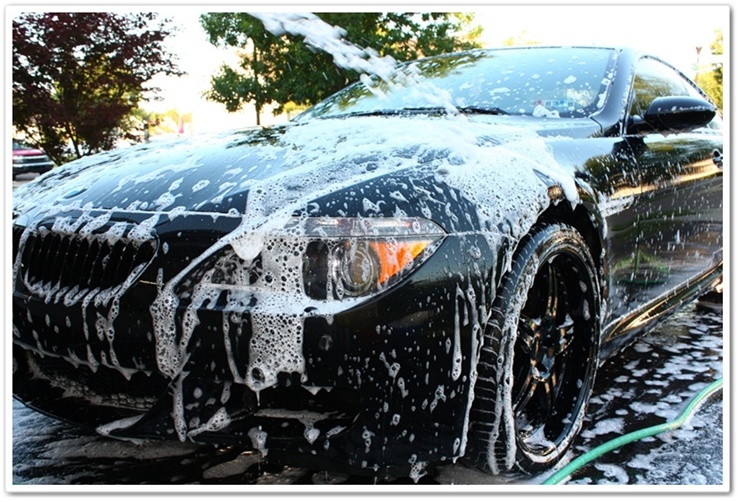
What Happens When You Get Your Beemer Detailed


We all know that when you get your vehicle “detailed” that the end product is a shiny version of your dirt laden, gummy worm sticky, dust ridden commuting machine.  What we don’t know is the exact process and precision that goes into making your car brand new again.  In today’s blog, we explain the steps that car detailer’s make to make your car a shining reflection of your ideal driving machine.

Car detailing helps retain a higher resale value for your vehicle. 

Detailers start with the exterior.  This involves cleaning and creating a shine to the car’s paint, chrome trim, windows, wheels and tires. Products can include: detergents, detail clay, wax, polishes and a variety of applicators and special cloths.

The exterior paint begins with cleaning, polishing and protecting. Cleaning the car starts by removing all foreign surface particles from exterior surfaces by washing it.  Polishing refers to using mechanical polishes by hand or with a machine and specific polishing pads that remove microns of clear coat from a vehicle to remove fine scratches and swirls from a paint surface produced from improper washing or drying technique.  Protecting involves the application of a protective wax that prevents foreign matter from adhering to the surface of the vehicle. 

The interior detailing includes cleaning the compartments, dash areas, windows, panels and seats.  Vacuuming is standard and steam cleaning and brushes may be used to remove stains on upholstery. 

Keep that shine going!!!

Wednesday, August 7, 2013

How to Prepare Your Car for Long Term Storage


So, you’re running out of room in your front yard, garage, mother’s house, friend’s condo, cousin’s yard, and anyone who’s tired of seeing one of your vehicles in their personal space.  Now, you’ve decided to store your extra vehicle.  You envision yourself riding of in it in the future, hair flowing, top down, and want to ensure that it’s taken care of.  In today’s blog, we’re discussing what tips to follow to maintain your vehicle for long-term storage.

Check your paperwork:  make sure you renew your registration, or set a reminder when the time is near so that your car is good to go when you’re ready to drive it.

Service your vehicle: Always make sure that your vehicle’s engines and fluids are in good shape before you store your vehicle for a long period of time. Also, fill windshield washer fluid, coolant, transmission, brake fluid, and make sure you fill your car with gasoline.

Clean the interior/exterior: Throw away trash, vacuum the seats, wash the windows, wax the car and even have it detailed if possible. 

Fully charge battery:  make sure your battery is at OPTIMAL power.  Also, if you’re storing your vehicle for more than six months, disconnect it from the power source and keep the battery somewhere temperate and dry.

Do you have any tips to add?  Feel free!

Storing your car for a long period of time?  Follow these tips to ensure its good to go when you’re ready:

Wednesday, July 24, 2013

Staying AWAKE Behind the Wheel


Hey, Fans.  Here at the dealership, we make your well being a huge factor.  By creating and maintaining a safe environment for you, we give you the chance to feel comfortable in coming to see us for a vehicle.  Any questions regarding vehicle maintenance and safety can be answered quickly and efficiently.  We wish we could be with you every step of the way after your purchase, but we know that most commutes occur alone.  That’s why we’ve compiled some details of staying awake behind the wheel.  We’ve all driven home tired, even when we know we shouldn’t be.  By following these rules, you can avoid turning a bad situation into a catastrophic one.  
  1. Get a Good Night’s Sleep! – Getting a good night’s sleep is essential to good driving habits.  Eight hours is the usual requirement, but almost a third of adults receive less than 6.
  2. Learn and Heed Warning Signs of Fatigue – experiencing wandering thoughts? Yawning repeatedly? Find yourself dosing off periodically?  Take a break and re-adjust yourself.
  3. Drive with a Passenger – if you can, have someone accompany you on the drive home.  That way, you can engage in conversation and avoid dosing off.  
  4. Schedule a Break – on long trips, every 2 hours or every 100 miles, take a break to stretch and catch your bearings before you continue to your destination.
Feel free to add your own tips!

We’ve all driven home tired, even when we know we shouldn’t be.  By following these rules, you can avoid turning a bad situation into a catastrophic one.  

Wednesday, June 26, 2013

Annual Summer Maintenance Checklist


Summertime is here!  Small children are parading the streets with a sense of pride and enjoyment, parents are scrambling to avoid the heat by hibernating near air-conditions and consumers nationwide are looking forward to the faint smell of charred BBQ.  This summer, we’re running down our checklist of car maintenance tips for our customers.  In today’s blog, you’ll find a quick list of services we can provide that will help you maintain the life of your vehicle and ensure a smooth summer this year. 

Radiator Flush – Coolant is important to your radiator and should be replaced accordingly. 

Replace Air Filter – This should be replaced twice a year.  It only takes us a few to complete the change.

Tire Check – summer traveling IS the rainy season.  Try and make sure that your tires are up to snuff.  Ask us about the tire pressure and we can provide a thorough breakdown.

Replace Wipers – When’s the last time you replaced your wipers? This is important for wavering summer rain.

Inspect Your Brakes - It's a good idea to inspect your brakes twice a year just to be sure everything is up t snuff. Car safety should always be a top priority. Go ahead and check your brake fluid while you're at it.

Check Your Battery – Corrosion buildup can happen quickly.  Check your battery posts and cables to ensure you’ll have no starting problems.

Come in today for a maintenance check and we’ll be happy to help!!!

Wednesday, May 29, 2013

Our Favorite Instagram Photos of the Month


Every once in a while, we’ll find some really awesome photos that deserve some recognition.  These photos embody the style and panache we aim to achieve with our vehicles.  In today’s blog, we’re providing our FAVORITE Instagram photos for the month of May.  Vote for your favorite below!


 (tuaaof, balibagirli, ese_jeymarr11, xxxsaki738)